.svg)


Insight
SHARE
PUBLISHED
Feb 13, 2026
AUTHOR
MEDIA CONTACTS
The Department of the Treasury and the IRS have released proposed regulations for the Section 45Z Clean Fuel Production Credit. While the guidance impacts all clean fuels, the implications for the Renewable Natural Gas (RNG) sector are distinct and significant. With the “One Big Beautiful Bill Act” (OBBBA) —signed into law on July 4, 2025— extending the credit through 2029, the new rules solidify the transition from volume-based incentives to Carbon Intensity (CI) based revenue, creating a clear hierarchy of value between landfill gas and agricultural digester projects.
Key Developments for RNG Producers
1. Operational Risk: Registration for Continuous Production
The confirmation of the credit’s extension through 2029 is a major win, but it comes with a strict operational hurdle. Unlike previous retrospective credits, 45Z requires producers to be registered (Form 637) at the time of production. For RNG facilities that operate continuously (24/7), this is a critical compliance checkpoint. The IRS has clarified that Letters of Registration do not backdate; any fuel produced even one day prior to the effective date on the letter is permanently ineligible for the credit. Any gas injected into the pipeline prior to the effective date of your registration letter is ineligible for the credit, creating an immediate revenue risk for active projects.
2. Emissions Rates: The Manure Advantage
The regulations confirm that credit value is tied to the 45ZCF-GREET model, but they introduce a critical distinction for the RNG sector regarding negative CI scores:
- The General Rule (Landfill/Wastewater): For most feedstocks, the credit calculation is capped. The statutory emissions factor is calculated as (50 minus emissions rate) divided by 50. If your emissions rate is 0 kg CO2e/mmBTU or lower, you maximize the base factor at 1.0 (earning ~$1.00/gallon equivalent). You generally cannot claim a factor greater than 1.0 for fuels produced after December 31, 2025.
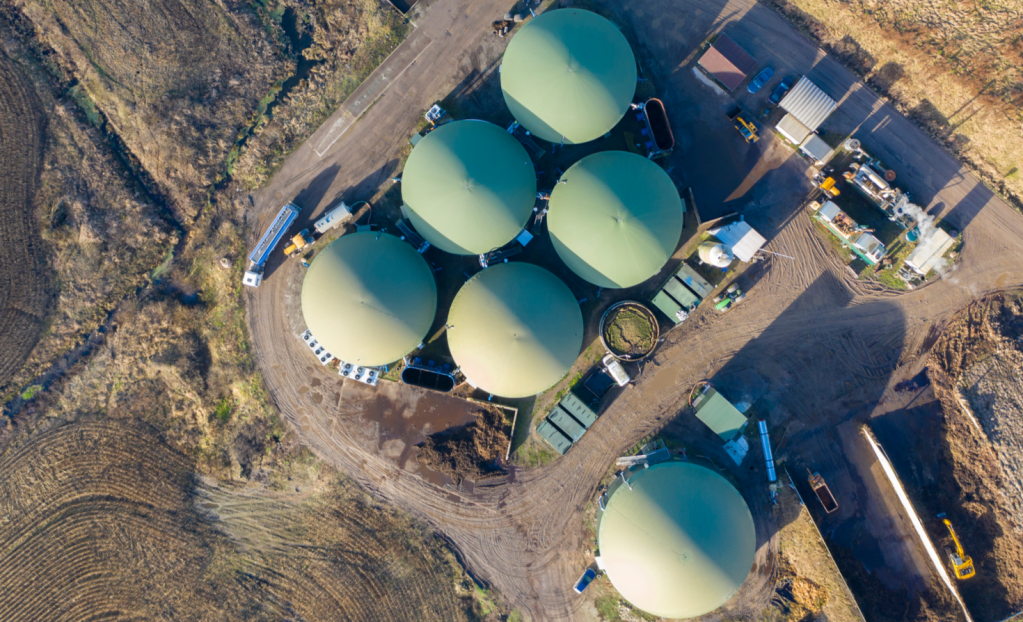
- The Manure Exception: Fuel derived from livestock manure is exempt from this cap. Dairy and swine projects can utilize negative CI scores to generate an emissions factor greater than 1.0, effectively uncapping the credit value for the lowest-CI projects.
3. The CI Gap: Pending Calculations & Deal Impact
Not every eligible RNG configuration is fully addressed by the annual emissions rate table, particularly certain co-digestion or complex configurations. Where the annual table is not usable, the proposed regs provide a provisional emissions rate (PER) process to obtain a reliance-ready emissions rate after first obtaining a Calculated Emissions Value Letter from the Department of Energy (DOE).
- Impact on 2025 Tax Credit Transactions: This can create a temporary valuation gap. Pathways requiring provisional determinations may be producing gas without a finalized, reliance-ready emissions rate. Spot transactions and 2025 offtake agreements should allocate the risk if the ultimately accepted emissions rate is less favorable than internal engineering estimates.
- Impact on 2026+ Transactions: Longer-term agreements should include “change in law” provisions that address potential year-to-year changes driven by updates to the annual emissions rate table and related guidance, not only plant performance. Producers must use the version of the model in effect for the taxable year in which the fuel is produced.
4. Feedstock Restrictions as Market Protection
The OBBBA legislation introduces a strict North America feedstock sourcing restriction (United States, Canada, Mexico) starting in 2026.
- For RNG: Since RNG is inherently domestic (sourced from local waste), this is not a compliance burden. It is a competitive shield.
- The Impact: This rule disqualifies imported low-carbon feedstocks by essentially de-valuing imported waste oils to zero, as the current 45ZCF-GREET model contains no valid pathway for imported used cooking oil (UCO). By removing these competing volumes from the subsidy pool, the regulation effectively prioritizes domestic waste streams, potentially tightening the market for shared compliance credits like LCFS.
5. “Suitable for Use” Clarified
The RNG industry had previously raised concerns that the IRS might require strict adherence to chemical standards like ASTM D8080. The new guidance sides with practical industry norms, clarifying that RNG is “suitable for use” if it is produced so that, if further compressed, it could be used as fuel. This effectively blesses the standard practice of injecting gas into common carrier pipelines, provided it meets the interconnection quality specifications. Importantly, the proposed regulations clarify that “actual use” in a vehicle is not required; consequently, gas sold to stationary users—such as natural gas plants for electricity generation—remains eligible for 45Z if the fuel was interchangeable with fossil gas at the point of injection.
6. Intermediaries and Off-Take
To claim the credit, producers must sell to an “unrelated person.” The proposed regulations broaden the attribution rules for sales through intermediaries (marketers), reducing the risk that using a third-party broker would disqualify a sale. However, producers should still audit their off-take agreements to ensure the chain of custody remains compliant.
7. Anti-Stacking Flexibility
The guidance provides clarity on preventing “stacking” with other credits (such as 45V or 45Q). This determination is made on a year-by-year basis, allowing a facility to claim Section 45Q for carbon sequestration in one year and switch to Section 45Z in another year if the fuel’s CI value makes the production credit more lucrative. However, making a Section 48 election for hydrogen energy property is irreversible and permanently disqualifies the facility from 45Z.
8. Transferability Deadlines
Section 45Z credits are fully transferable under Section 6418, but the election to transfer must be made on the original filed tax return for the year of production. No transferability elections are permitted on amended returns, necessitating that all credit purchase agreements be finalized by the annual tax-filing deadline.
Strategic Implications
For Basis clients, 45Z creates a bifurcated market. Landfill gas projects now have a firm revenue ceiling (capped at the zero-emission rate), while agricultural digesters retain their high-upside potential through negative CI scoring. The “Domestic Feedstock” rule acts as a structural price support for the entire sector by clearing out foreign competition.
Next Steps
The public comment period is open until April 6, 2026. We recommend all RNG clients review their registration status immediately to ensure no production gaps occur during the transition to 45Z.
Simplify tax credit transfers with Basis
Get Started

